Field Briefing
Executive Summary
The Western discovery of the Giant Panda did not originate from a structured scientific expedition, but rather through the ecclesiastical networks of a French Lazarist missionary in western Sichuan. Père Armand David operated the Catholic mission at Muping (modern Baoxing) in the 1860s, extracting biological specimens by leveraging local Tibetan and Yi hunters. Modern historical narratives often obscure this reliance on indigenous intelligence. CAE expeditions through the Qionglai Mountains explicitly examine the logistical mechanisms that enabled these 19th-century taxonomic breakthroughs.
The popular misconception surrounding the Western discovery of the giant panda envisions a grand, well-funded zoological expedition pushing heroically into the uncharted bamboo forests of central China. The historical reality bypasses this romantic framework entirely.
The defining taxonomic breakthrough of the 19th century originated not from a university-backed team, but from a solitary French Lazarist priest managing a remote Catholic outpost in the Qionglai Mountains. Operating in the 1860s with minimal funding, Père Armand David bypassed formal expeditionary logistics and instead integrated himself into the local socio-economic fabric of Muping (now Baoxing County).
Historical records indicate that did not discover the panda through rugged field tracking; he acquired it because local hunters brought it to him. Acknowledging this friction—the absolute dependence of Western taxonomy on native hunting networks—forces a fundamental reassessment of how European science mapped the biodiversity of the Sino-Tibetan frontier.
[!METADATA]
Series: Pioneer Files
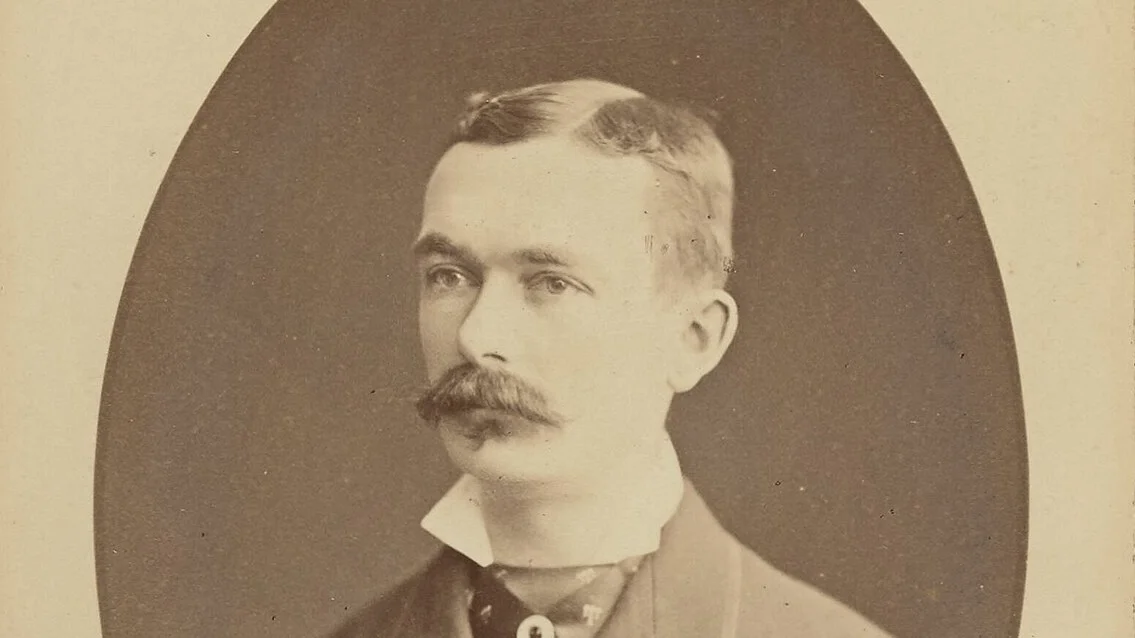
Subject: Père Armand David (1826–1900)
Primary Expedition: Lazarist Mission botanical and zoological surveys in Baoxing (1869)
Key Region: Baoxing (Muping), Ya'an, Sichuan
I. The Strategic Outpost at Muping
In 1869, the Catholic mission at Muping functioned as an administrative and logistical anchor deep within the mountainous topography of western Sichuan. Père Armand David (1826–1900) commanded this Lazarist outpost not merely as a spiritual director, but as a systematic biological cataloger acting on behalf of the Muséum national d'Histoire naturelle in Paris.
The mission provided the essential physical infrastructure required for preservation and cataloging in an environment that otherwise destroyed organic material rapidly through high humidity and decay.
Unlike later institutional botanists, David embedded himself within a pre-existing sociopolitical framework. Muping represented an independent principality governed by a local tusi (chieftain), insulating the missionary from broader Qing administrative friction.
Historical records indicate that jurisdictional anomaly permitted David unparalleled access to the surrounding ecological corridors. He established a processing laboratory within the church compound, transforming the religious sanctuary into a processing hub for the scientific extraction of Asian flora and fauna.
By anchoring his operations within this stable ecclesiastical node, David mitigated the severe logistical vulnerabilities that typically compromised short-term foreign expeditions. Today, CAE logistics protocols analyze these exact historical supply chain strategies when navigating the Baoxing sector.
II. The Monumental Catalog
The volume of biological intelligence David shipped back to Paris fundamentally reorganized European zoological understanding. Beyond the defining acquisition of the giant panda (Ailuropoda melanoleuca) in March 1869, David's taxonomic extraction from the Muping valleys proved astonishing in its breadth. He secured the first Western records of the Golden Snub-nosed Monkey (Rhinopithecus roxellana) and the dove tree (Davidia involucrata).
This cataloging effort directly catalyzed subsequent exploration phases. The singular pressed specimen of the dove tree that David dispatched to Paris sat dormant until 1899, when the Veitch nursery commissioned a young E.H. Wilson to return to Sichuan and extract its seeds—a directive that launched Wilson's own legendary botanical career.
Furthermore, David identified the Milu deer (Elaphurus davidianus), a species already extinct in the wild and surviving only in the Imperial Hunting Park in Beijing, effectively rescuing the genus from total erasure. His methodology compelled Western institutions to recognize western Sichuan not merely as a geographic frontier, but as an irreplaceable biodiversity reservoir. CAE field briefings consistently cross-reference David’s original species distribution data against modern conservation realities.
III. The Mechanics of Local Intelligence
The prevailing narrative of the lone explorer obscures the operational reality of David's success: his absolute reliance on local intelligence. David did not possess the specific physiological conditioning or the specialized tracking capabilities required to penetrate the high-altitude bamboo thickets of the Qionglai ranges. Instead, he deployed capital and established commercial relationships with native Tibetan and Yi hunters.
These indigenous operators possessed generational knowledge regarding migration patterns, seasonal feeding habits, and the topographical idiosyncrasies of the Hengduan eastern margins. When the hunters laid the black-and-white skin of the "white bear" before David, they executed a commercial transaction, not a scientific collaboration.
David’s genius lay not in field tracking, but in recognizing the taxonomic anomaly of what the hunters provided and meticulously preserving the evidence for the arduous overland and maritime transit to France. Disregarding the Tibetan and Yi informants effectively erases the foundation of the discovery.
The CAE expedition framework actively reconstructs this historical reliance, ensuring participants understand that the mapping of western China depended entirely on the tactical exploitation of native expertise.
Recommended Reading
- David, Armand — Abbé David's Diary: Being an Account of the Scientific Travels of Père Armand David (translated by Helen M. Fox, 1949). The definitive translated field diary.
- Wilson, E.H. — Aristocrats of the Garden (1917). Details Wilson's search for the dove tree David discovered.
- Mearns, Barbara and Richard — Biographies of Bird and Mammal Collectors in China (1998). Section on Père David's ornithological contributions.
[!EDITORIAL]
Pioneer Files Curation Note
The Pioneer Files is a historical curation by China Alpine & Frontier Expeditions (CAE) for the Expedition Library. Each dispatch in this series reconstructs the path of a figure whose journey through China's frontier regions shaped the history of exploration. Their legacies—celebrated, controversial, or complex—remain etched into the very landscapes our modern expeditions traverse.
CAE conducts all expeditions with deep respect for the diverse histories, cultures, and sovereign heritages of the local peoples whose lands these historical pioneers entered.
Document History
| Version | Date | Summary |
|---|---|---|
| Current | 2026-07-25 | Active field edition. Content verified against current PRC regulations and CAE operational protocols. |
This article is maintained by the CAE Editorial & Logistics Intelligence team. Regulatory environments in Western China change frequently. While we update field guides on a rolling basis, always verify permit requirements and medical protocols with CAE operations staff prior to departure.
FREQUENTLY ASKED QUESTIONS
Embark on This Route
CAE operations staff secure all high-altitude clearance and logistics. Contact our expedition designers to draft your permit-cleared private itinerary.
Consult your DesignerCo-Design Your Expedition
Our resident designers respond within 24 hours to draft your permit-cleared private itinerary.